Sleep Optimization for Bodybuilders: Maximize Your Gains at Night When it comes to sleep gains bodybuilding athletes can unlock, most Australians are leaving serious progress on the table every single night. You might be training with perfect form, hitting your macros, and recovering with the right supplements — but if your sleep is suboptimal, you…
Sleep Optimization for Bodybuilders: Maximize Your Gains at Night
When it comes to sleep gains bodybuilding athletes can unlock, most Australians are leaving serious progress on the table every single night. You might be training with perfect form, hitting your macros, and recovering with the right supplements — but if your sleep is suboptimal, you are actively sabotaging your results. Sleep is not passive downtime. It is the most anabolic window your body has, and for serious Australian bodybuilders chasing real size and strength, mastering your nights is just as important as mastering your sessions.
Why Sleep Gains Bodybuilding Athletes Achieve Are Rooted in Biology
Growth Hormone: The Nocturnal Anabolic Window
The pituitary gland releases the majority of its daily GH output in a series of pulses, with the largest pulse occurring within the first 90 minutes of sleep — specifically tied to slow-wave sleep (SWS). GH drives protein synthesis, promotes fat oxidation, and triggers the release of IGF-1 from the liver. Disrupt or shorten your deep sleep, and you blunt this hormonal surge before it reaches its peak.
Protein Synthesis and Muscle Repair
Resistance training creates micro-tears in muscle fibres. Protein synthesis — the process by which your body rebuilds those fibres thicker and stronger — is elevated significantly during sleep. This is why a casein-rich snack before bed (cottage cheese, Greek yoghurt, or a casein shake) is a well-supported strategy.
Testosterone and Cortisol Balance
Testosterone peaks during REM sleep. Sleep deprivation — even a single week of under-sleeping — has been shown to reduce testosterone levels by 10–15% in healthy young men. At the same time, cortisol rises sharply with inadequate sleep, creating a hormonal environment that favours muscle breakdown over muscle building.
Understanding Sleep Stages and Their Role in Recovery
NREM Sleep: Stages 1, 2, and 3
Stage 3, slow-wave or deep sleep, is the physically restorative powerhouse. This is where GH peaks, tissue repair accelerates, and immune function strengthens. Deep sleep is most abundant in the first half of the night, which is why going to bed late disproportionately costs you physical recovery.
REM Sleep: Brain Recovery and Hormonal Balance
REM sleep dominates the second half of the night and is critical for cognitive recovery, motor skill consolidation, and testosterone secretion. Cutting sleep short in the early morning strips away your REM sleep disproportionately.
How Much Sleep Do Bodybuilders Actually Need?
For natural bodybuilders training 4–6 days per week with high training volumes, a target of 8–9 hours is practical and evidence-supported. For more on the broader recovery picture, see our guide on Post-Workout Recovery: Science-Backed Strategies for Serious Athletes.
Sleep Gains Bodybuilding Tips: Practical Sleep Hygiene for Lifters
Anchor Your Sleep Schedule
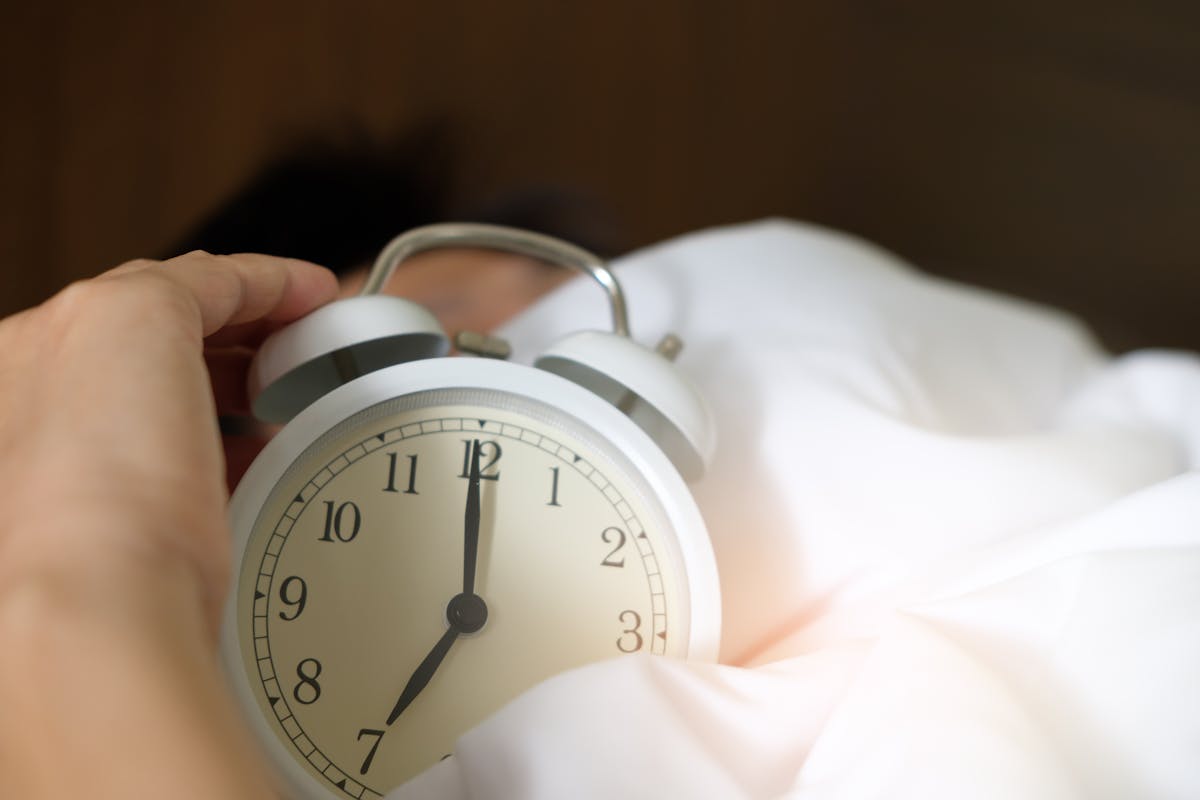
Going to bed and waking at the same time every day, including weekends, is the single most powerful habit for improving sleep quality. A consistent schedule strengthens the timing of your GH pulse and testosterone surge.
Control Light Exposure
Bright light — especially blue-spectrum light from phones and screens — suppresses melatonin production and delays sleep onset. Dim your environment 60–90 minutes before bed. In the morning, get direct sunlight within 30 minutes of waking to anchor your circadian rhythm.
Optimise Your Sleep Environment
Set your room temperature between 17–20°C if possible. Use breathable, moisture-wicking bedding materials such as bamboo or cotton percale. Blackout curtains are essential — even small amounts of ambient light can disrupt melatonin and reduce deep sleep duration.
Managing Sleep in Australian Heat and Humidity
Australian bodybuilders in Queensland, the Northern Territory, and coastal NSW face a genuine challenge: heat and humidity actively undermine sleep quality. High humidity prevents evaporative cooling, keeping core body temperature elevated during the early sleep window. Practical strategies include: taking a cool shower 60–90 minutes before bed; using a fan or air conditioning; wearing minimal, breathable sleepwear; and using a cooling mattress pad.
Shift Workers and Bodybuilding: Navigating Disrupted Schedules
A significant portion of Australian bodybuilders work in mining, healthcare, emergency services, or hospitality — industries with high rates of shift work. If you are a shift worker, the goal is to protect sleep duration and create as much circadian consistency as possible. For those managing the psychological demands of non-standard schedules alongside training, our article on Mental Health and Bodybuilding: Motivation, Burnout, and Body Image offers relevant support strategies.
Strategic Napping for Bodybuilders
A 20-minute nap in the early afternoon (typically between 1–3 PM) can reduce sleep pressure, improve alertness, and support recovery without meaningfully disrupting nighttime sleep. Avoid napping after 4 PM if you struggle with nighttime sleep onset.
Supplements That Support Sleep Quality
Magnesium
Magnesium plays roles in the regulation of the GABA receptor system and neuromuscular function. Intense training depletes magnesium through sweat losses. Magnesium glycinate at 200–400 mg elemental magnesium taken 30–60 minutes before bed is well-tolerated. Readily available in Australian pharmacies.
Melatonin
Available over the counter in Australia in low doses. A dose of 0.5–1 mg taken 30–60 minutes before the intended sleep window is effective for shifting circadian phase. It works best combined with light management strategies.
Other Supportive Supplements
Ashwagandha (KSM-66 or Sensoril extracts) has emerging evidence for reducing cortisol and modestly improving sleep quality. L-theanine at 100–200 mg promotes relaxation without sedation. Both are widely available in Australia without prescription.
Tracking Sleep with Wearables
Devices such as the WHOOP strap, Oura Ring, Garmin Forerunner, Apple Watch, and Fitbit all provide estimates of sleep duration, sleep stage distribution, and heart rate variability (HRV). HRV is a valuable readiness marker — a chronically suppressed HRV score suggests accumulated fatigue and should prompt a reassessment of training load.
Putting It All Together: Your Sleep Optimisation Blueprint
Set a consistent sleep and wake time. Manage light exposure morning and evening. Cool your sleep environment. Prioritise 8–9 hours during hard training blocks. Use strategic napping on heavy volume days. Supplement with magnesium glycinate as a baseline. Track with a wearable and use HRV trends to inform training intensity decisions.
For a long-term perspective on sleep and training longevity, explore our article on Longevity and Performance: How to Train Hard and Stay Healthy for Life.
Your body builds muscle between sessions, not during them. Protect that process fiercely. The gym is where you send the signal — sleep is where the adaptation actually happens.